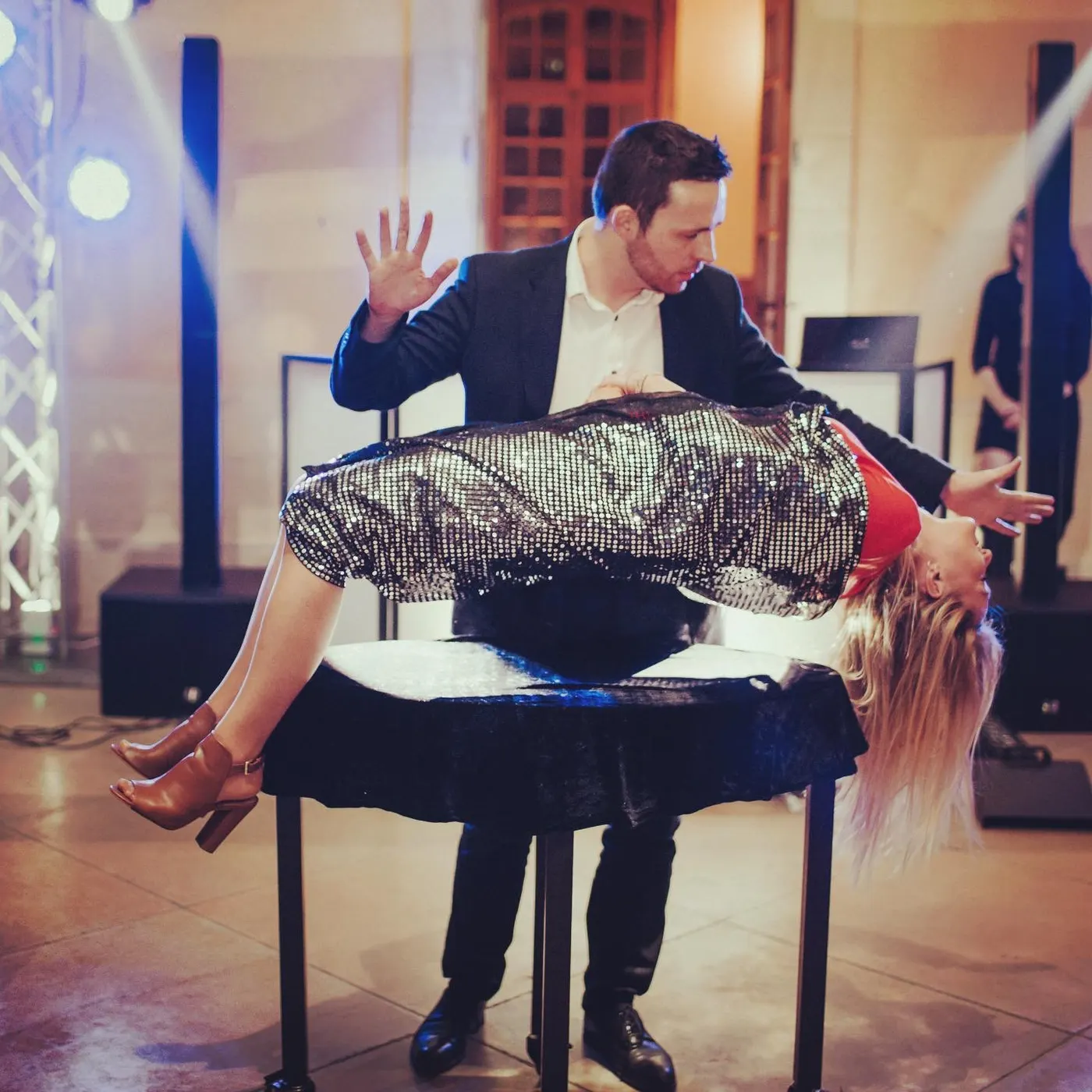
The stage show, seen from table 32
A show written for people who cannot see the stage
Most stage acts assume a theatre: everyone facing forward, a sightline to every gesture. A gala ballroom offers none of that, so this show is built the other way round. The effects happen with guests who come up from the tables, which means every table has a stake in what is going on. The reveals are large and binary, a name, a number, an object that should not be where it is, so that they land from the back of the room as well as the front. For rooms above two hundred, the venue's screens relay the close-ups, and the act is designed to be watched on them.
Mentalism has one more advantage that no visual act has at a dinner. The moment a stranger's private thought is read out loud, the room turns round. It does not need to be seen; it needs to be heard. That is why a mentalist holds a gala where a juggler, however good, plays to half of it.
And the evening carries your message without a pitch. A prediction sealed before the dinner that matches the figures in the speech; the name of the main award winner, written weeks ago, opened by the CEO on stage; the destination of next year's incentive appearing in a guest's hands. Guests remember the trick; the message rides with it. For a conference gala, the same performer can give the AI keynote in the afternoon, so the whole day has one thread.