The Monaco room
What a two-square-kilometre country asks of a performer
The first thing is languages. A dinner in Monte-Carlo is rarely held in one of them: the host speaks French, the guests of honour English, a cousin Italian, a partner Russian, and the children of all of them switch between three. Anything built on a joke dies at the second table. Mentalism is the opposite case. A guest thinks of a word, keeps it to himself, and the moment that word turns up written on a card that has been face down since the starter, the whole table has understood it in the same second, each in their own language.
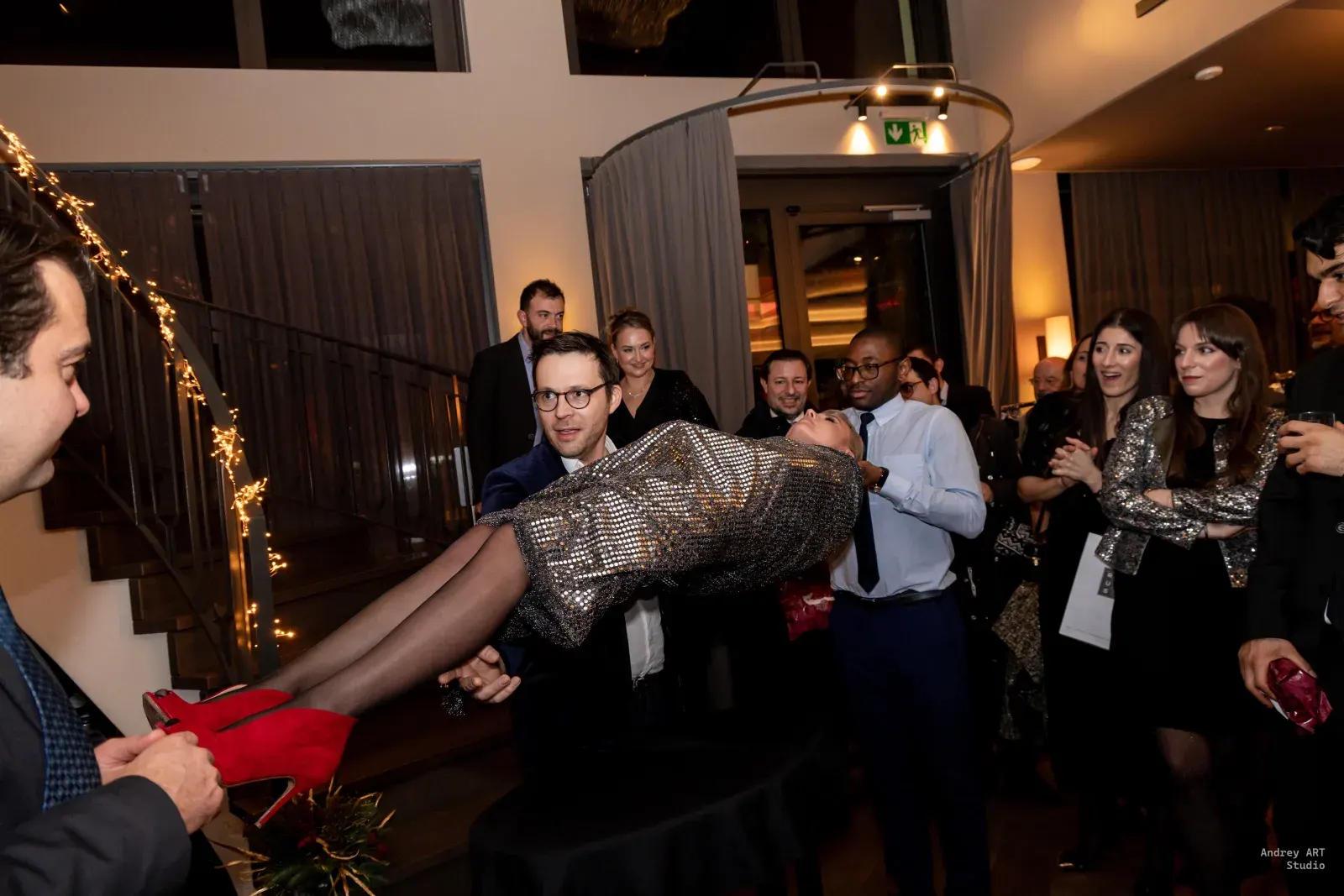
The second is proximity. The Principality entertains in small rooms: a saloon with twelve people, a terrace with thirty, a private dining room above the harbour. Guests here have seen the big productions elsewhere. What they have not often seen is something impossible happening in their own hand, at a distance of thirty centimetres, with nothing between them and the performer. That is where the close-up work lives, and it is the reason the act travels with no stage, no sound system and no crew.
The third is discretion, which in Monaco is not a courtesy but a condition. Who was in the room, what was celebrated, where it took place: none of it appears on this site, in a social post or in a conversation with the next client. References exist and are shared during the enquiry when a host allows it. Otherwise the evening stays in the room.